Stretch
Sometimes you have the capacity and want to build a skill, practice a strategy, or do something the harder way because the outcome matters to you. This is an option, not the default expectation.
Why NeurodivergentAF exists
To meet people where they are and build practical support around the life they are actually living.
Neurodivergent people don’t need more judgment, more analysis, or another system that expects them to become someone else. At the end of the day, people just need something that works, whatever that looks like.
Your brain doesn’t work like other people’s? Cool. How do we WORK WITH it?
The world seems intent on over-coddling, under-supporting, stigmatizing, trivializing, and over-analyzing neurodivergence. The point of NeurodivergentAF is to cut through the crap and get down to the practical question: what would actually make this person’s life work better? Full stop. It’s as simple as that.
That means support has to flex around different moods, communication styles, energy levels, budgets, access needs, priorities, and definitions of success. No diagnosis is required. No perfect explanation is required. The starting point is the person in front of us and the parameters they are working within.
Life is complicated enough. The system is continually being built to offer more than one route: ongoing coaching, one-time help, free resources, practical tools, and publications designed to make the next step easier to find and easier to use.
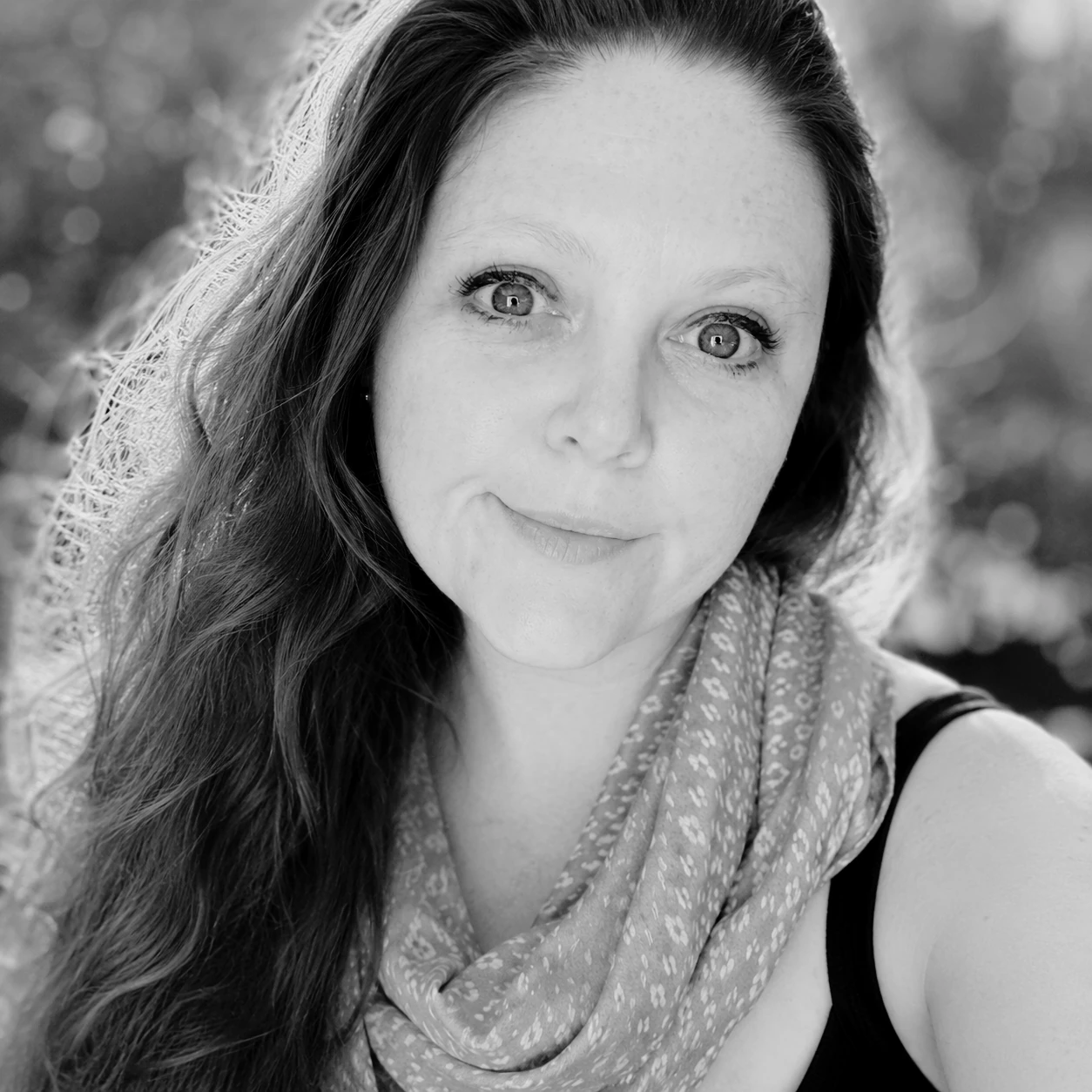
About me
I’ve been saying it for years, and that’s where the brand comes from. It’s a badge I use when I introduce myself so people have realistic expectations. I’ll probably not remember your name. I may wander off in conversation. When a situation matters, I can apply the extra energy required to meet someone else where they are. But ADHDAF is my resting rate.
But I didn’t ALWAYS know that. I was diagnosed with ADHD at 31, after my memory became so unreliable that I begged a doctor for a brain scan because I genuinely thought I had brain cancer. I’d stopped driving. I’d lost a successful career in life insurance because I couldn’t keep track of the basics. My life was falling apart.
When the GP rattled off a few questions and told me I “just had ADHD,” I was furious. I felt patronized. I got a second opinion. The psychologist immediately agreed, but that still wasn’t enough. I was incapacitated, and the cultural trivialization of ADHD made the explanation sound like a joke.
Finally, I applied for a national medical trial for adults with ADHD. After blood work, EKGs, and hours of intense interviews, I asked whether I qualified. They said, “Oh God, yes.” That was when I finally believed them.
After the identity crisis settled, I started looking back at my life differently. I realized I had been building systems to compensate for how my brain worked for as long as I could remember: routines, shortcuts, backup plans, external reminders, environmental adjustments, and strange little workarounds that made my life possible.
Most of the people closest to me were neurodivergent too. They had built their own systems. Different brains, different lives, different methods, but the same basic idea: stop forcing yourself through a setup that doesn’t work and build one that does.
Later, I worked for a company whose vision I genuinely believed in, but whose execution left a lot to be desired. I saw how much better neurodivergent support could be if flexibility, safety, practical strategy, and genuine care were built into the system from the beginning. Eventually, I decided to build the thing I kept wishing existed.
The philosophy underneath everything
That lifetime of building workarounds led to a very simple philosophy. Imagine you are short and something you need is on a high shelf.
You can stretch. You can grab a stool. You can move the shelf. None of those choices says anything about your intelligence, effort, worth, or character. They are simply different ways of working within the parameters in front of you. Neurodivergent support should work the same way.
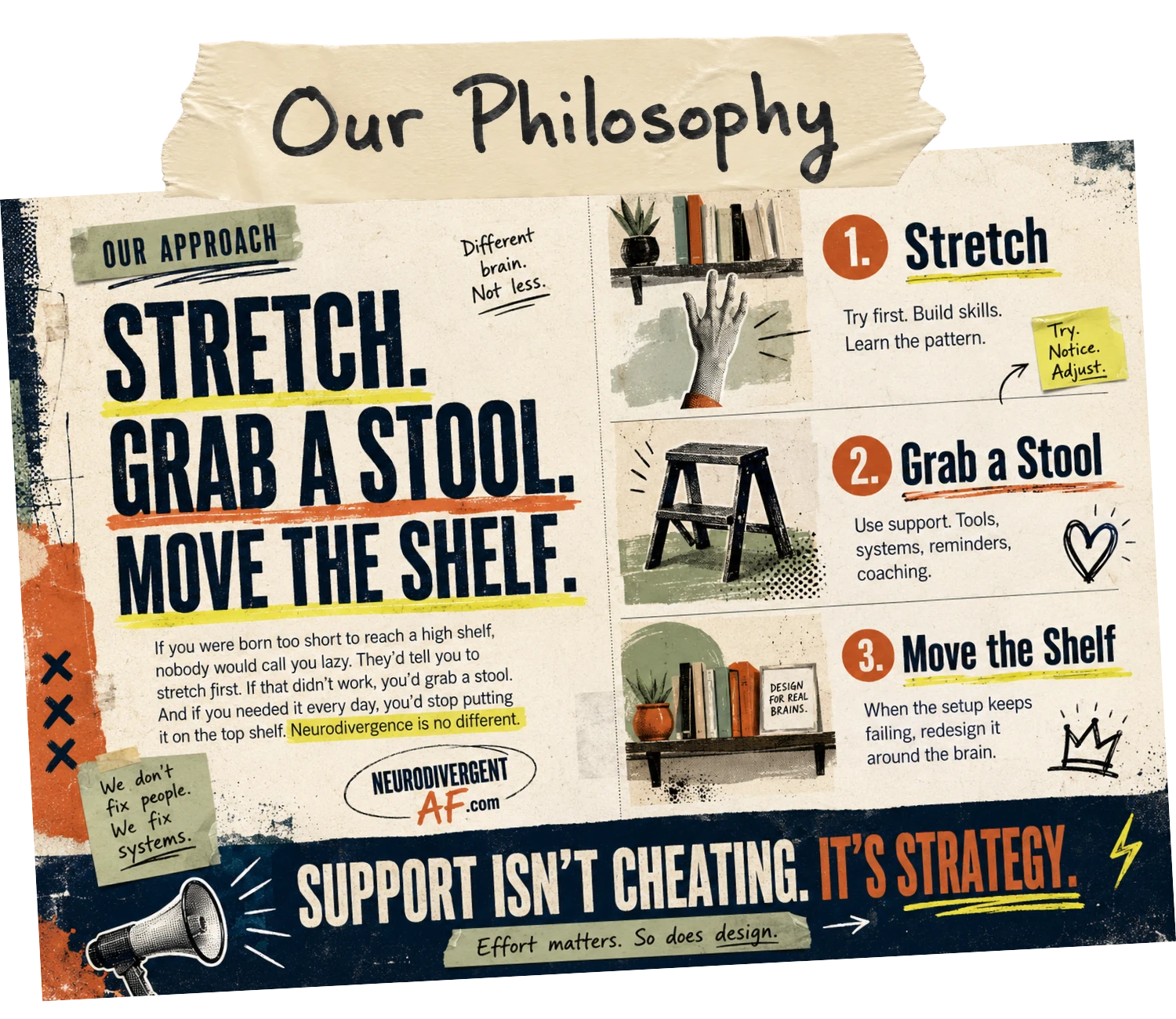
Sometimes you have the capacity and want to build a skill, practice a strategy, or do something the harder way because the outcome matters to you. This is an option, not the default expectation.
Sometimes an external tool, reminder, checklist, body double, automation, accommodation, coach, or another person’s working memory gives you access without requiring unnecessary effort.
Sometimes the demand, process, environment, timeline, or expectation is the actual problem. Instead of continually forcing yourself to adapt, change the setup.
We aren’t here to tell you which path is right for you. We’re here to guide you through the conversation, help you ask good questions, and come up with novel answers. To help you understand the parameters you are working with and choose the response that fits your life, priorities, and available capacity.
The heart of NeurodivergentAF
It’s really that simple.